
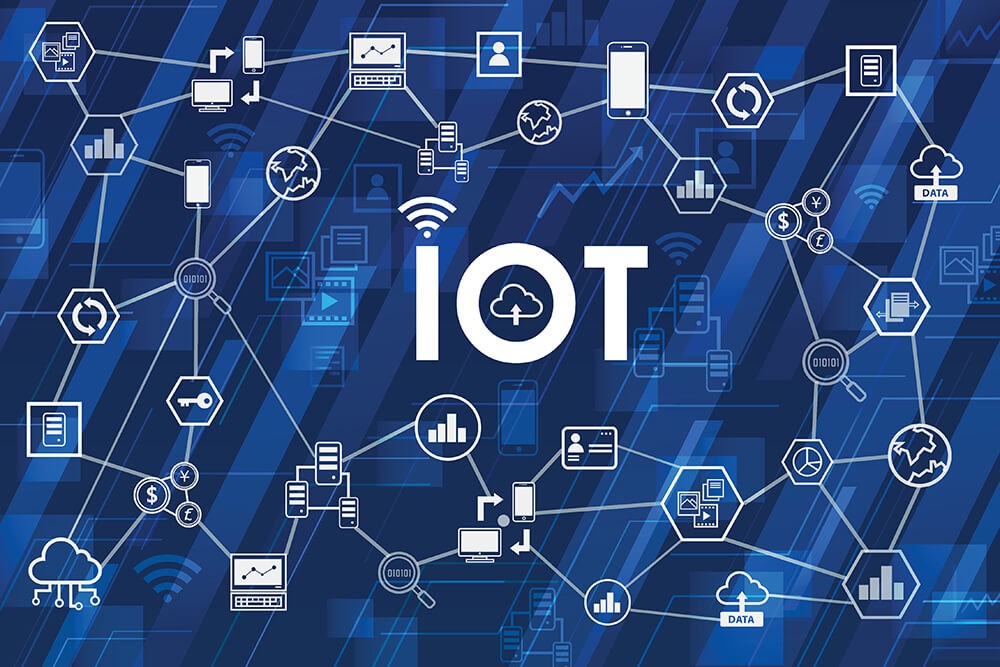
The Internet of Things (IoT) is growing as a path to a more linked international by means of integrating technology and human interaction. IoT is one of the largest technology trends that groups are not most effective in making an investment in 2020, but are even looking to understand in-depth as part of their R and D departments.
According to Statista, in 2009, there were about 900 million linked matters in use around the world. Someday around 2007, the wide variety of gadgets on earth surpassed the variety of people. By 2020, it’s predicted that the range of gadgets will reach 20 billion.
The first net-related device was a Coke system, and it was set up at Carnegie Mellon University in the Nineteen Eighties that could report its inventory level using the ARPANET (the changed name used for the internet then). The Coke system gave an inventory count number to the providers, making the complete project of restocking hassle-free.
In the subsequent decade, we saw merchandising machines coming up at all the big locations of social gatherings or commuting. Because the range of devices increased, the primary task was connecting everyone among them to acquire important statistics.
The next step becomes the wireless generation. Perhaps, in an extended haul, however, nonetheless, believe a clever refrigerator that might tune your everyday usage gadgets and organize them online as quickly as they need restocking; the imagination is geared to get higher in each manner.
The term net of factors came into use once again in 1999, whilst Kevin Ashton, co-founder of the MIT automobile-ID center, coined the term. The acronym IoT came into use at some stage in the 2010s, but as soon as the term was coined, it became widely used.
Ashton had imagined the use of the RFID (Radio-Frequency Identity) technology to connect gadgets, but the generation became inefficient as the variety of users increased. IP technology proved to be greener in managing the assignment of the growing quantity of devices and record switches.
In June 2000, the sector’s first internet-linked fridge appeared, released through LG’s internet virtual DIOS, providing a LAN port for IP connectivity. The idea of IoT was noticed in greater actual international implementation within the 2000s.
In 2008, the IPSO Alliance was formed as a collaboration of all the enterprise partners that were interested in selling the related devices. It was one of the first signs and symptoms that greater outstanding agencies and no longer just entrepreneurs or researchers had been inquisitive about this technology, and there is a capability for a boom.
During the last decade, the IoT era has been one of the leading frontiers, where huge companies are making an investment.
Right here are some Stats to help with the Growth.
1. Through 2020, the discrete production, utilities, and transportation and amp; logistics enterprise is projected to spend close to $forty billion on various IoT systems, services, and structures.
2. McKinsey predicts that the IoT marketplace is expected to be worth $581 billion for ICT-based spends by 2020, with a CAGR of 7–15%.
3. The commercial internet of factors (IIoT) marketplace is expected to reach $123 billion in 2021, accomplishing a CAGR of 7.three% via 2020.
4. In keeping with a Forrester Survey, industrial products are the main within the IoT adoption at 45%, with an extra 22% making plans to undertake it within the next twelve months.
5. In step with Capgemini, Harley Davidson reduced the build-to-order cycle with the aid of Element 36 and grew the general profitability by three 4%. It had absolutely shifted the production to an IoT-enabled gadget.
The potential of IoT appears to be increasing with each newly delivered technology, reducing fees, and permitting business fashions with platform improvement (app improvement and integration).
IoT is currently the most researched technology globally, with the main focus on integration with cloud offerings and APIs. Businesses are looking to develop applications that use IoT technology to their advantage, gain access to real-time data at a quicker fee with greater accuracy.
High-speed networks will be the important thing to developing IoT utility usage, with tool makers including Samsung, LG, Qualcomm, Huawei, and Intel, all seeking to gain an advantage with the new patents. The above 5 organizations are the pinnacle patent holders, with approximately 13 hundred IoT patents. Samsung has the largest number of patents, with 820, at the same time as LG with 524, and Huawei with 490 patents.
No matter the growing fashion of adoption and studies within the quarter, there seems to be a sturdy disconnect among the various functions of building an IoT environment with the cutting-edge IoT gadgets.
1. Securing the Surroundings
Safety is, with the aid of a long way, the most important concern for organizations running in the direction of IoT improvement. Every tool is hooked up to the broader aspect computing network, and the overall assault floor is a lot larger than a traditional community structure.
Most of the gadgets have access to more than one network, giving a gateway to cyberattacks. In the IoT area, devices’ functions lack in self-reliant upgrades, even as most of them use modern safety protocols that traditional networks fail to take into account while evaluating dangers.
Credentials are the first step in the direction of fixing the security issue, as a maximum of devices are set to the default password when connected to the community. But the person makes use of a default password.
Mirai botnet attack is one of the prime examples of attacks going on because of the usage of default passwords. For network safety, groups have to rely upon the 0 agree with version of protection wherein gadgets are considered to be compromised.
2. Network Bottlenecks
The improved wide variety of connected gadgets is already putting strain on the current conventional community. If the agencies lack the framework to lessen latency in connectivity, the gadgets could be failing to satisfy their characteristic.
A centralized cloud network contributes to the bottlenecks for the devices, forcing them to funnel records again to the primary servers waiting for the response. Facts-processing delays in autonomous vehicles could make them absolutely inappropriate. Facet statistics centers can assist the enterprise in offloading primary data centers for remote regions and enlarge the functionality of IoT devices.
3. Compatibility
Standardization within the cutting-edge generation is an assignment; tool manufacturers still need to consider numerous compatibility concerns when an organization is dealing with network construction and addressing IoT troubles.
For the reason that IoT facet devices are pushed to the extreme areas of the network, it’s turning into a task for the carriers to manage the devices. Updates and compatibility patches must be added seamlessly for all of the gadgets and with minimal consumer input.
IoT is growing in many directions currently, and among the modern-day different technologies, including AI and ML, would turn out to be a common general.
Many of the compatibility troubles stem from the non-unified cloud offerings, consisting of the lack of standard M2M protocols, diversity in firmware, and even variations in some of the operating structures amongst IoT devices. Some of the technologies will finally grow to be obsolete.
4. Patron Issues
In line with a recent study by the Dutch cybersecurity firm Gemalto, 90% of the purchasers lack confidence in IoT security. Currently, 65% of people are concerned that diverse hackers might gain access to devices. Clients/providers around the arena are skeptical due to the fact maximum of the devices that might be used at domestic/places of work might compromise the person’s privacy.
IoT for businesses
The company is assisting the growing trend in the marketplace of IoT adoption. According to Gartner, there are presently more than five. Eight million endpoints with a purpose to be in use in each the organization and automobile industries by means of 2020.
Though the assignment stays, the possibility nonetheless grows. The construction and manufacturing industries are looking for an era that can tip the scales in automation. Most businesses have stepped into automation; however, the final link to attach automation to real-time monitoring of facts remains far from reach.
Carriers are providing organizations with the ability to build and install programs that could scale as many as tens of millions of linked gadgets. With the focal point transferring more towards establishments and commercial agencies, the IoT journey is taking steps towards the proper solutions. Businesses are actually drawing close to companies with rationale-based problems in preference to leveraging and the use of the issuer’s resources.
The IoT aspect fee reduction will play a critical role in the adoption journey, so there may be a need for end-to-end IoT solutions that could ease utility development and deployment. The inclusion of various variability in necessities related to tool functionality, communications, and application judgment calls for an integration of a bunch of different hardware and software elements. Integration, setup, and renovation complexities are setting up considerable boundaries for maximum enterprise-based IoT solutions.
Conclusion
To absolutely value the records supplied by the IoT devices, analytics and statistics infusion is needed. Records gathered from numerous sensors need to be processed in real-time; hence, the assignment for agencies could be developing a latency-free community with smaller gadgets of the information center.
Providers and IoT tool users are nevertheless concluding that the packages of real-time information analytics are the next step in the direction of processing that is more important. Organizations want to position IoT applications strategically because, over the next decade, the transformation could disrupt the devices market.
Whether they want to gain operational performance or value savings, IoT may be the next generation of the next decade, and if mixed with AI, there may be a push within the independent enterprise across numerous sectors. The configurable platform, value of possession, and protection of the network and devices may be the subsequent steps the corporations need to watch out for. To learn more about the technology, you could download our test whitepapers on IoT.