
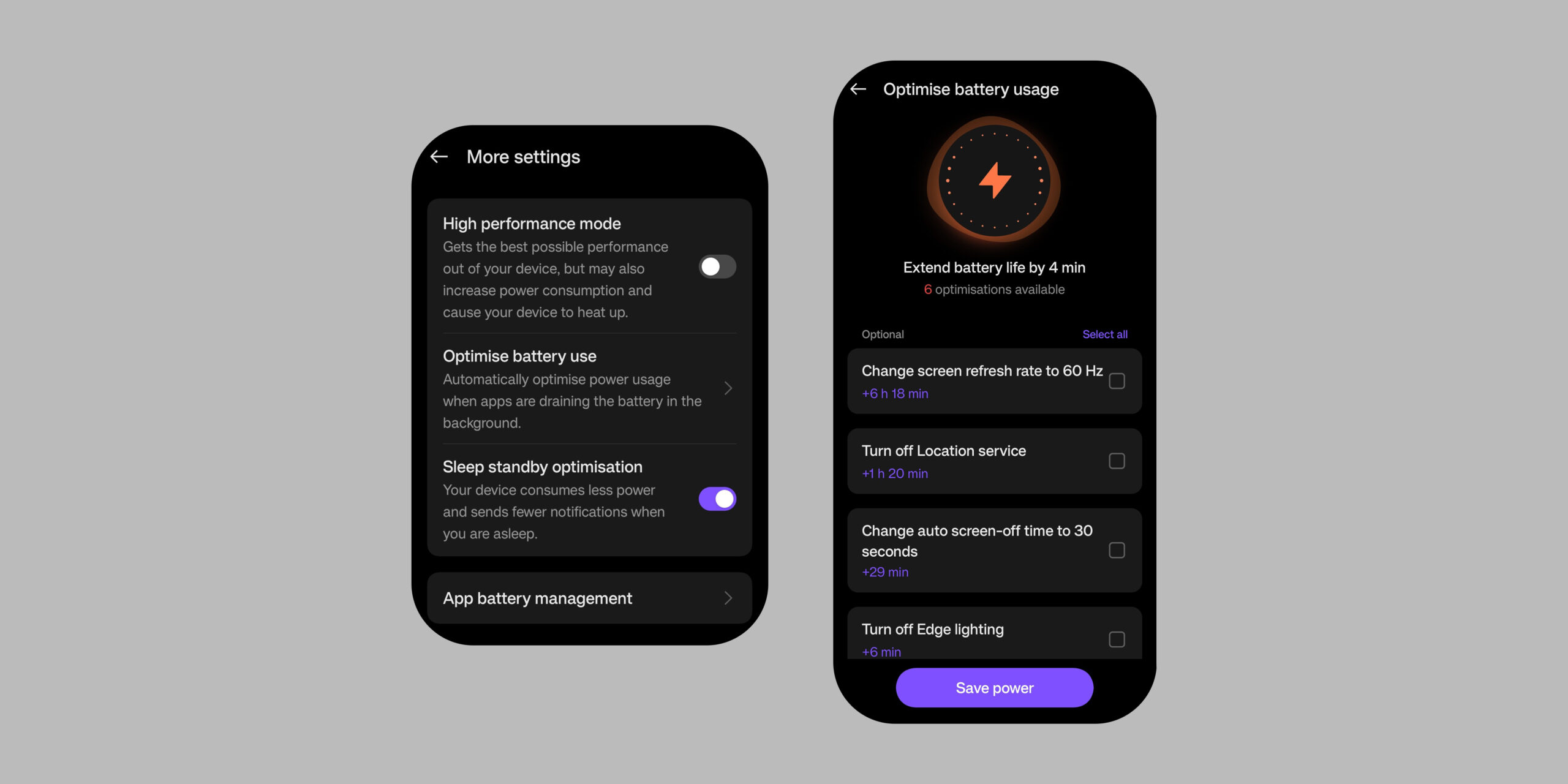
AI-powered laptops add a whole new level of efficiency and speed to your everyday tasks, but they also place greater demands on battery capacity and resources in the system. To ensure the best balance between efficiency, performance, and mobility, it’s important to adjust a few important settings that affect the way your device performs AI tasks, displays power, and handles background activities.
If you make the right adjustments, your laptop will stay cool, responsive, ve and stable throughout long working hours regardless of whether you’re on the road,r presenting, or using high-end AI-driven apps.
Let us guide you through the seven settings that can help you increase the life of your battery and perform making sure your laptop is more efficient and lasts longer, no matter where your life takes you.
Key settings to alter
1. Power mode and intelligent AI power profiles
Begin by choosing the main power mode since it is the one that sets the right balance between battery life and speed for all other things. Windows 11 allows you to change between balanced, efficiency, and performance settings under Settings, Control Panel, and Power & Battery, so choose the most efficient profile for your trips and an advanced profile for when you plug in for heavy AI work.
AI Laptops that are powered by AI come with built-in smart power modes that make use of AI to monitor your workload and switch power between CPU, NPU, GPU, and CP, U which can boost efficiency and battery life by assigning the correct tasks to the processor that is most efficient.
2. The brightness of the screen and the refresh rate
The display typically draws more power than a single chipe changing it can bring instant results. Quickcuts, or even the Settings application, lets you decrease the brightness while still keeping the image clear, which can significantly increase the life of your battery during lengthy meetings.
If your laptop with AI supports active refresh, you can enable it to refresh the screen more quickly only when it is needed and changes to a more gentle pace during reading, writing, or documents to conserve energy without compromising the user’s comfort.
3. Screen timeout and sleep
A long period of idle time with the screen turned off completely can drain your battery in breaks, travel, or even during side conversations. Windows 11 allows you to reduce the time between when the screen goes off and the system enters sleep mode under Power & Battery, which helps to reduce the amount of energy wasted when you’re away from your keyboard.
With the right AI equipment and optimal background performance, the laptop awakens quickly and is able to pick up your applications exactly where you left them. Therefore, the shorter timeouts will help with mobility instead of slowing you down.
4. Graphics as well as AI workload routing
Modern AI laptops integrate graphics with a higher-quality discrete GPU. Some have a dedicated NPU, which means that the default options might not be suited to your actual requirements. Windows graphics settings allow you to select which apps can run high-performance graphics and which applications should remain on integrated graphics, that helps to conserve battery when you use desktop applications for work or web-based dashboards.
The latest AI platforms can also shift appropriate AI tasks onto the NPU. This is able to run various models with less power than the GPU or CPU and enables any vendor’s AI optimization panel to handle tasks in this manner.
5. Background applications and the process of startup
Background activity will slowly eat both battery and performance, particularly on computers with a variety of tools installed. Windows or vendor tools offer you a list of the startup and background applications, so you can shut them off for the ones you don’t use, whichfrees CPU cycles and allows AI tasks run more efficiently. This also lets fans work less frequently when in the course of daily use, which makes the laptop’s AI system quieter when it is in use, and also when in shared areas.
6. Energy saver, battery saver, and limit on charge
The energy-saving and battery modes of Windows detect low battery levels and cut off the background tasks and brightness to increase the remaining time. Switch this on and set an appropriate trigger level to ensure the system can get you through long customer visits or travel without rushing to find outlets on the wall.
For optimal health over the long term, many laptops in the business class have battery protection features that limit charging to about 80 percent when working at a desk, which goes along with the general recommendation to keep charging at 100% or even near zero for a long period of time.
7. Profiles for thermal and fan with smart modes
It is a fact that heat affects performance and comfort, so you should choose a thermal profile that matches your lifestyle. Windows power settings can be set to prioritize quiet cooling for focused work or more powerful cooling for more intense AI training sessions. This ensures that performance stays steady instead of decreasing when the system is excessively hot.
Certain AI laptops come with intelligent modes that monitor temperatures, workload, and noise, and then adjust the fan’s speed and power according to the current condition.s This means that turning these on can help you maintain efficiency while also boosting the efficiency of your battery.
Key actions in one glance
Quick checklist to prepare for an office day
- Choose an efficient or smart power mode for your mobile day, as well as a performance mode when you plug into.
- Dim the brightness and turn on dynamic refresh rates for an even cooler and longer-lasting display.
- Shorten the screen timeouts and sleep timeouts so that idle time doesn’t drain your battery.
- Route everyday applications to integrated graphics and reserve high-performance graphics to support real-time digital as well as AI loads.
- Shut off any non-essential startup or background applications to ensure that resources are available to perform AI tasks.
- You can enable the energy saver feature or battery and make use of any protection feature for your battery or charge limit feature when you are in lengthy work hours.
- Select a cooling profile and smart option that is able to balance peaceful tasks, AI performance, and the most comfortable temperature.
Conclusion
A laptop powered by AI should feel like a calm, competent partner instead of one that eats up its battery and gets hot when the day is over. If you keep these 7 settings honed to your preferences, your laptop will remain flexible for the most demanding AI tasks and be able to last through offsite sessions, and even late-day reviews.
When you tweak these settings, take note of how your day is impacted by each of the profiles, and refine the settings until your laptop can keep up with the team’s pace. The more focused you are with regard to display, power, as well as AI optimization, the better your device can support real human focus, deep collaboration, and a confident performance when it’s most needed.